
Danish passenger-car road-pricing trial cuts city traffic by up to 22%
A large-scale Danish passenger-car road-pricing trial reduced traffic in city centres by between 12% and 22%, according to findings highlighted in the latest EETS Facilitation Platform (EFP) progress report.
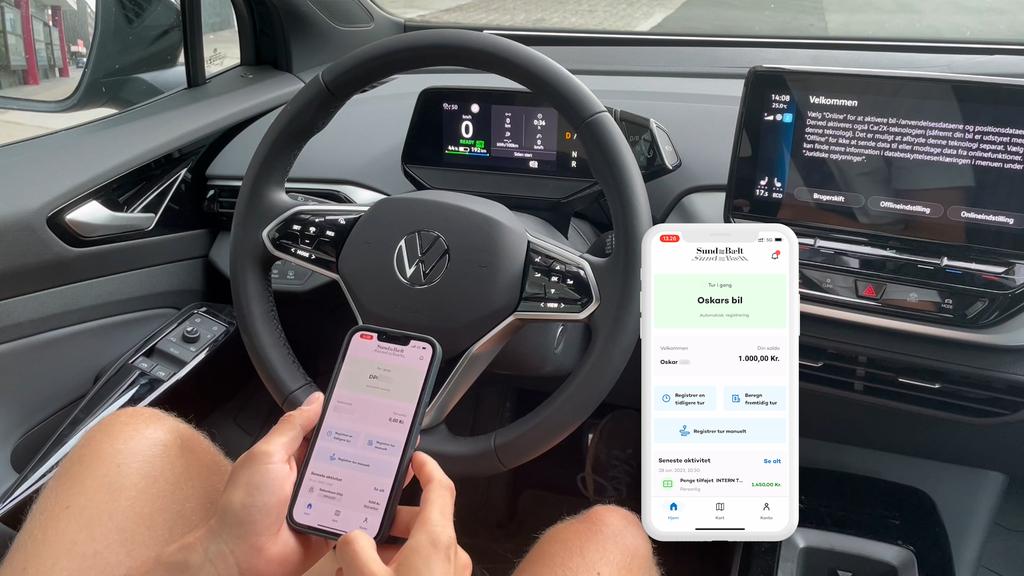
Approximately 2,900 motorists participated in the trial between November 2023 and July 2025. It was conducted by the Technical University of Denmark and Sund & Bælt for the Danish Ministry of Transport, with funding from the European Union’s NextGenerationEU programme. Participants tested kilometre- and time-based charging models using a smartphone application to record journeys and calculate charges.
Rates varied according to location and time, with higher prices applying in city zones and during peak periods. Kilometre-based rates ranged from DKK0.50 to DKK3.25 (€0.07-€0.44) within the trial’s charging areas, while time-based rates ranged from DKK0.35 to DKK1.50 (€0.05-€0.20) per minute. Different models applied charges in central urban areas, surrounding suburban zones or across the national road network.
The largest traffic reductions were recorded in central Copenhagen, Aarhus, Odense and Aalborg, where volumes fell by approximately 12-22%. Suburban zones around the cities experienced reductions of between 7% and 11%. Peak rates were approximately twice the corresponding off-peak charges. The results found that traffic fell further during peak periods in proportion to the higher rates, indicating that differentiation by time and location could target congestion more precisely.
The trial also tested the practical administration of charging, including registration, billing, customer service, communications and trip-data processing. Its results concluded that “road pricing for passenger cars is technically feasible”, although robustness, user-friendliness and administration would be important considerations in any future scheme.
While the smartphone application worked in practice, the EFP report said a future national system might require several registration and charging options, potentially including an app, an onboard unit or technology integrated into the vehicle.
The trial did not recommend a particular charging model or commit Denmark to introducing passenger-car road pricing.
Its findings are intended to inform future political decisions covering traffic impacts, technology, data handling, administration and the design of possible charges.