
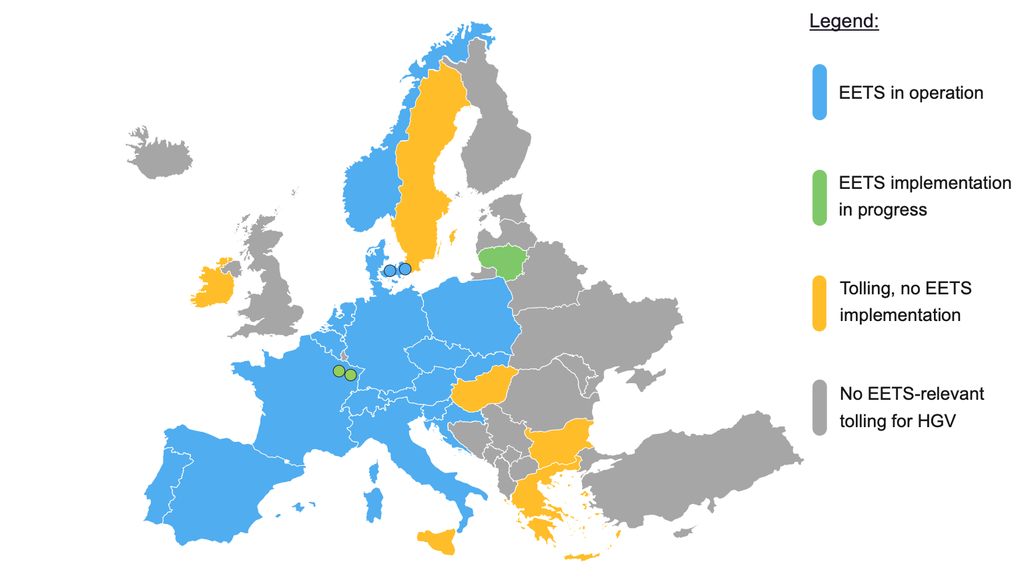
EETS report warns new toll systems risk launching without full interoperability
Compressed implementation schedules for new European tolling systems could prevent European Electronic Toll Service (EETS) providers from completing integration before national schemes begin operating, according to the latest EETS Facilitation Platform (EFP) progress report.
The 74-page report identifies Lithuania and Romania as the most immediate areas of concern. Lithuania plans to introduce its Via Toll distance-based charging system on 1 January 2027, but the EFP describes the country’s implementation period as very short. The report said it was “highly uncertain whether any EETS providers will be in a position to integrate with the Lithuanian toll charger” before launch.
Romania’s new distance-based truck-tolling system is scheduled to begin on 1 October 2026, according to the latest information available to the EFP. However, the report said no EETS specifications or processes were known three months before the planned launch and that interoperability was expected to be added during 2027.
The EFP questioned how the European Commission would approach national systems that begin operating without EETS, given that the EETS Directive requires the service to be included as part of new electronic tolling systems. By contrast, the report describes the Netherlands’ kilometre-based HGV charge, launched on 1 July, as a major expansion of the European interoperable-tolling market.
Annual toll revenue from the Dutch domain is estimated at approximately €1bn (£864m), with a substantial proportion expected to be handled by EETS providers. Viapass reported that the combined market share of EETS providers in Belgium increased by approximately 4% between December 2025 and June 2026, reaching almost 75%.
The report suggests that preparations for the neighbouring Dutch system were responsible for a significant part of that growth. Across Europe, the EFP has identified 20 registered EETS providers. However, it estimates that only around six are pursuing broad coverage across a large number of European toll domains, with the remainder concentrating on particular regions or services for light vehicles.
The report anticipates further market consolidation through company withdrawals, acquisitions or mergers.
It also warns that overlapping system deployments, changes to regulation and the introduction of CO₂-differentiated tolling are placing considerable demands on providers’ technical resources.
CO₂-based charging is operational in several European countries, but the report describes the rules as highly complex for toll chargers, providers and road users.
It suggests that consideration should be given to whether the current arrangements could eventually be replaced by a simpler set of toll-specific regulations.