
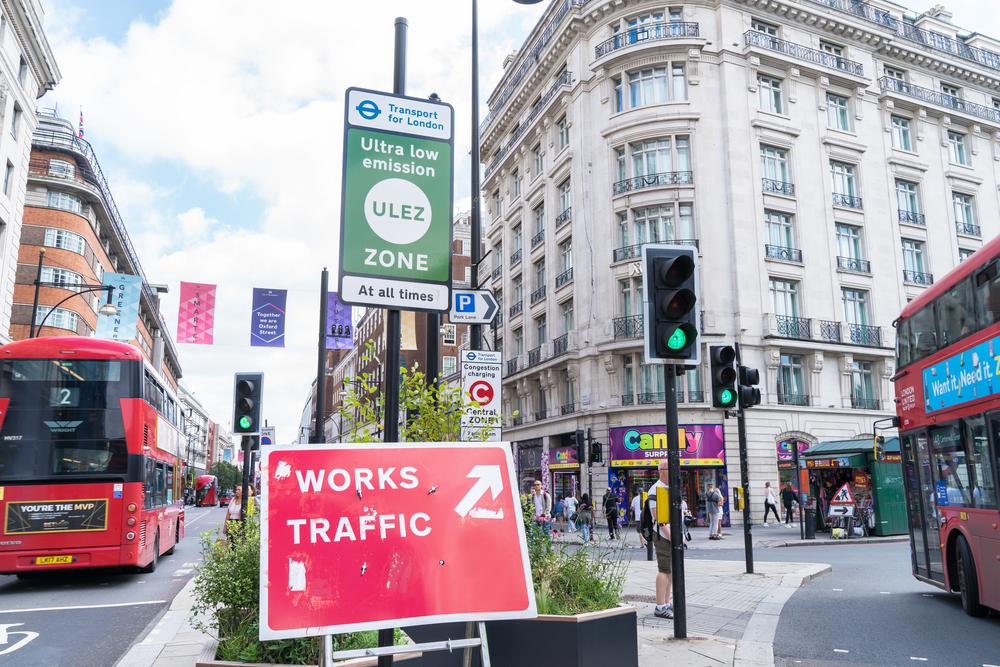
Study links London ULEZ to improved lung growth in children
Air-quality improvements following the introduction of London’s Ultra Low Emission Zone (ULEZ) have been associated with accelerated lung growth among children living in central London.
The five-year Children’s Health in London and Luton study recruited 3,414 children aged between six and nine from 84 primary schools. It included 1,664 children living within the original central London ULEZ and 1,750 in Luton, which was selected as a comparison area with a similar mixture of traffic pollutants but no clean-air charging zone.
Researchers measured the children’s lung function annually between 2018 and 2022. The measurements began before the central London ULEZ was introduced in April 2019. At the start of the study, children in London reportedly had significantly poorer lung function than those in Luton, while their modelled exposure to nitrogen dioxide was approximately 19µg/m³ higher.
Over the following four years, nitrogen dioxide exposure among the London children reportedly fell more than twice as quickly and by more than twice as much as it did in Luton. Researchers measured forced expiratory volume in one second, or FEV₁, which records how much air a person can expel during the first second of a forced breath.
Annual FEV₁ growth among the London children was approximately 10ml greater than among those in Luton. By the end of the study, average FEV₁ levels in the two groups were comparable. The proportion of London children classified as having clinically impaired lung function also fell from 14% to 9%. In Luton, the equivalent proportion declined from 9% to 7%. The research, published in The Lancet Public Health, also found that long-term exposure to air pollution was associated with larger lung-growth deficits among Asian and Black children than among White children.
Lead author Dr Helen Wood, research fellow at Queen Mary University of London, said: “We already knew that the ULEZ reduced air pollution, but now we know that children’s lung health has improved at the same time.” She cautioned that pollution levels in both London and Luton remained above World Health Organization guidelines at the end of the study.
Mayor of London Sir Sadiq Khan said the research “proves we were right to act” and reinforced his decision to extend the ULEZ beyond central London. Sarah Sleet, chief executive of Asthma + Lung UK, said: “ULEZ can spark fierce political debate, but this study replaces the polarised opinions with hard evidence.” The charity called for comparable clean-air zones to be considered in other UK cities, arguing that reducing children’s exposure to air pollution could lower their risk of developing serious lung conditions.
Independent experts welcomed the findings but cautioned that the study could not establish that the ULEZ alone caused the improvement.
Professor Stephen Burgess, professor of biostatistics at the University of Cambridge, described the change in lung function as “striking” but said: “Whether this improvement can be attributed to the introduction of ULEZ regulations is more questionable.” The Science Media Centre’s expert review noted that London and Luton differed in respects other than the presence of a clean-air zone.
The research also overlapped with the Covid-19 pandemic and associated changes in traffic, pollution and travel behaviour.
The researchers therefore described the ULEZ and accelerated lung growth as being strongly associated rather than claiming that the scheme was conclusively responsible for all the improvement.
London extended the ULEZ to inner London in October 2021 and across Greater London in August 2023. However, the study followed children within the original central London zone and did not directly assess the effects of those subsequent expansions.